
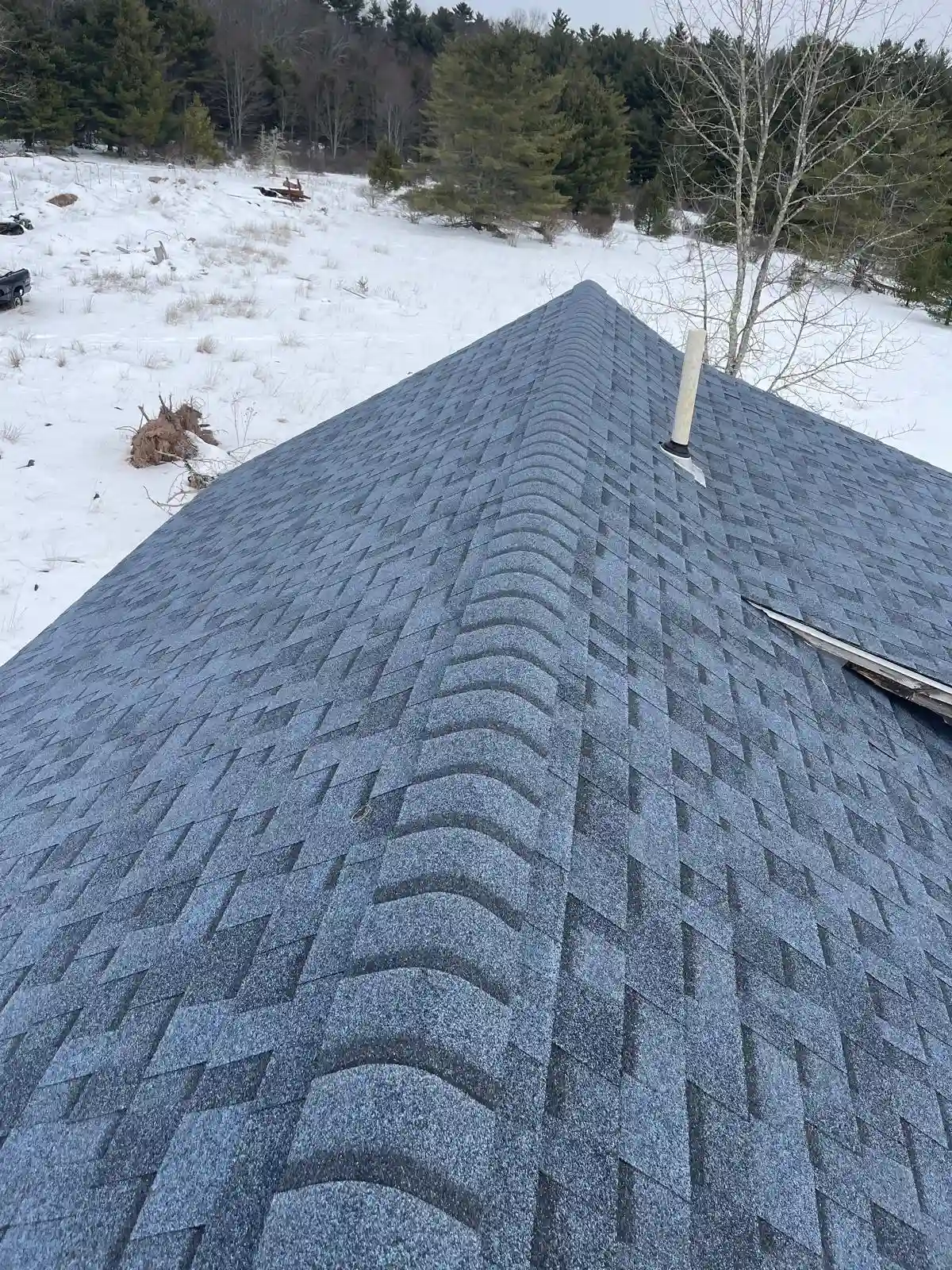
Roof leaks are one of the most common calls we get at JEF General Contracting, especially after heavy rain, ice dam season, or windstorms. The tricky part about a roof leaking in Connecticut is that the water rarely comes in where you see it on the ceiling. Water can travel along rafters and down framing for several feet before showing up inside. So the spot on your ceiling is just the symptom. The real leak is somewhere else on the roof.
In this guide, we'll walk through the most common reasons roofs leak in Connecticut and New York homes, what to check first, and when it's time to stop patching and call a roofer. After 30+ years working on roofs in this climate, we've seen pretty much every type of leak there is.
Damaged or Missing Shingles
This is the most obvious cause and usually the first thing we check. Shingles get damaged from wind, hail, fallen branches, and just plain old age. After a big storm, look up at your roof from the ground. Are there any dark spots where shingles are missing? Any shingles curling at the edges or lifting up?
Asphalt shingles in Connecticut typically last 20 to 25 years. If yours are getting close to that age, expect to see granules in your gutters and the occasional shingle in the yard after a windy day. Once shingles fail, water gets through to the underlayment, and from there it finds its way into your attic. A missing shingle in the wrong spot can cause a leak within the first heavy rain.
Flashing Failures Around Chimneys, Vents, and Skylights
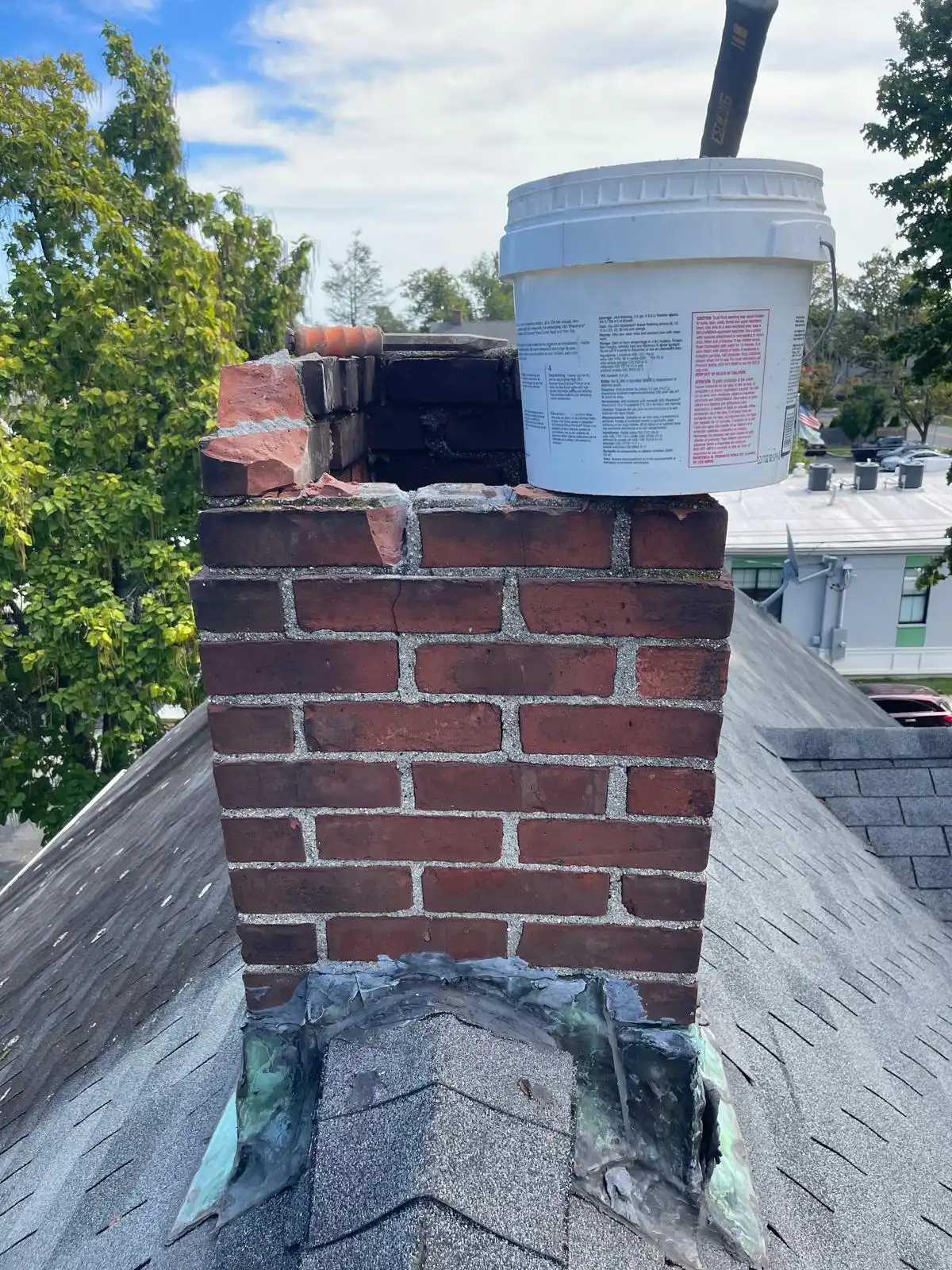
Flashing is the thin metal that seals the joints where the roof meets something else: a chimney, a vent pipe, a skylight, or a wall. When flashing is installed wrong, gets damaged, or just gets old, those joints leak. And flashing problems are actually the most common cause of roof leaks we see — not bad shingles.
If your ceiling stain is near a chimney, a bathroom vent, or a skylight, the flashing is the first suspect. Counterflashing on chimneys (the part cut into the mortar joints) is especially prone to failure because freeze and thaw cycles in Connecticut work the metal loose over time. Around skylights, the bottom flashing usually fails first because that's where water sits longest. A good roofer can re-flash these areas without replacing the whole roof.
Ice Dams in Winter
Connecticut winters are tough on roofs, and ice dams are one of the main reasons. When snow on the upper part of your roof melts (usually from heat escaping the attic) and re-freezes at the colder eaves, you get a ridge of ice that blocks water from draining off. The trapped water then backs up under the shingles and into your house.
Ice dam leaks usually show up in the same spots: along exterior walls, in upstairs ceilings, and around eaves. If you're seeing leaks only in winter, ice dams are almost certainly the cause. The fix is part roofing (proper ice and water shield at the eaves) and part attic work (better insulation and ventilation to keep the roof cold).
Old Roof at the End of Its Life
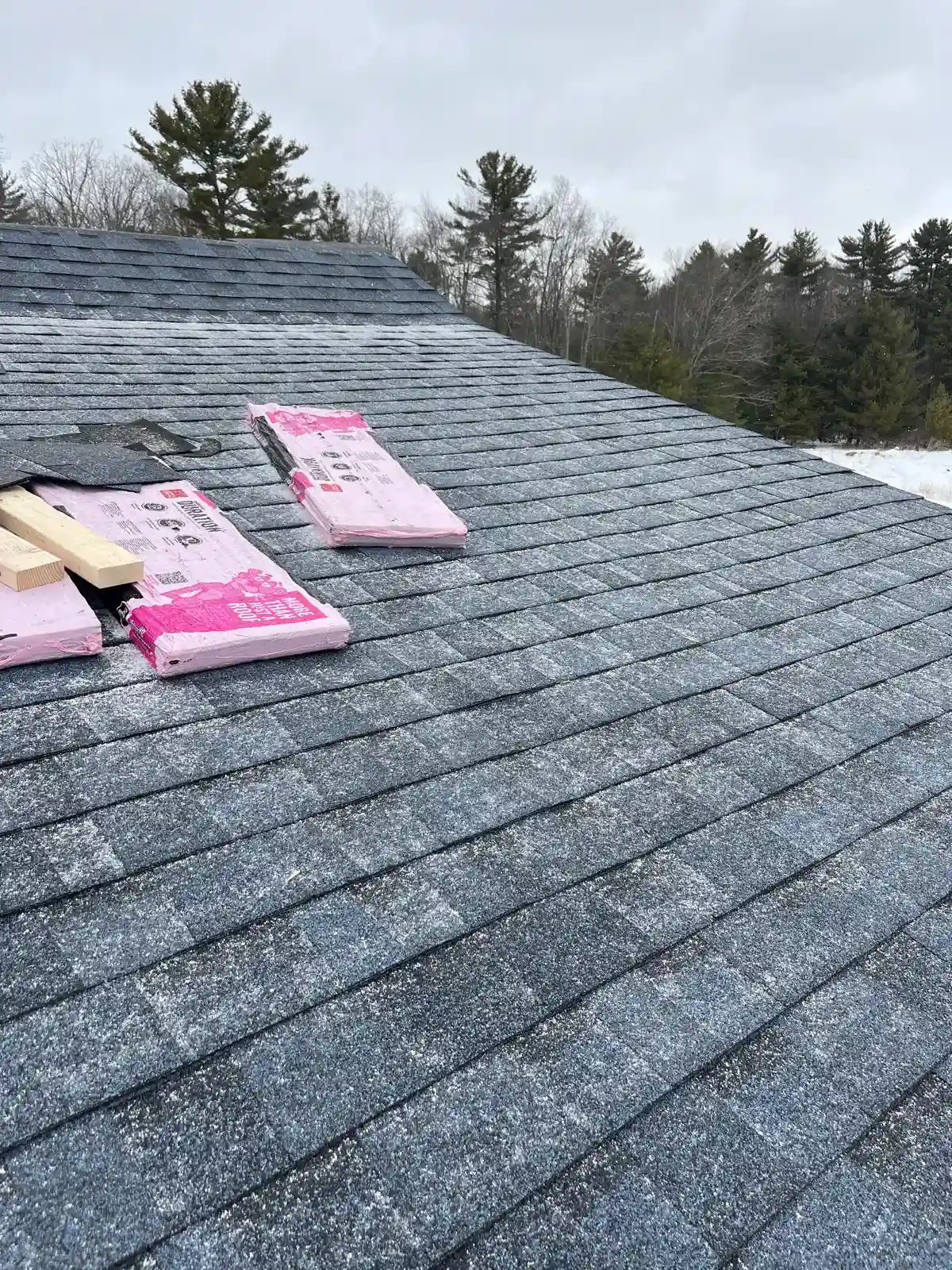
Sometimes a roof isn't leaking from one specific problem. It's leaking because it's just done. If your roof is 20+ years old and you're seeing leaks in multiple spots, curling shingles across the whole surface, lots of granules in your gutters, or visible sagging, you're probably past repair territory.
Patching a roof that's at the end of its life is throwing money at a problem that's only going to get worse. Every patch buys you a few months at best, and the next leak will pop up somewhere else. A full roof replacement gives you a fresh underlayment system, new flashing everywhere, and a new warranty period. For most Connecticut homes, replacement makes more sense than ongoing repairs once a roof crosses the 20 year mark.